Early Orthodontics
Early & Comprehensive Treatment for Children
The American Association of Orthodontists recommends children see an orthodontist as early as age 7 — catching issues early can simplify or eliminate future treatment.
How to tell if your child may need early orthodontic treatment
Watch for these signs — any one of them is a good reason to schedule a complimentary evaluation with Dr. Murthy:
- Early or late loss of baby teeth (age 5–13)
- Difficulty chewing and/or biting
- Mouth breathing
- Thumb sucking past age 5
- Speech impediments
- Protruding teeth (top and bottom teeth extend away from each other)
- Teeth that don't come together in a normal manner — or even at all
- Shifting of the jaw when your child opens or closes their mouth (crossbite)
- Crowded front teeth around age 7–8
Phase 1: Early Treatment (Ages 7–10)
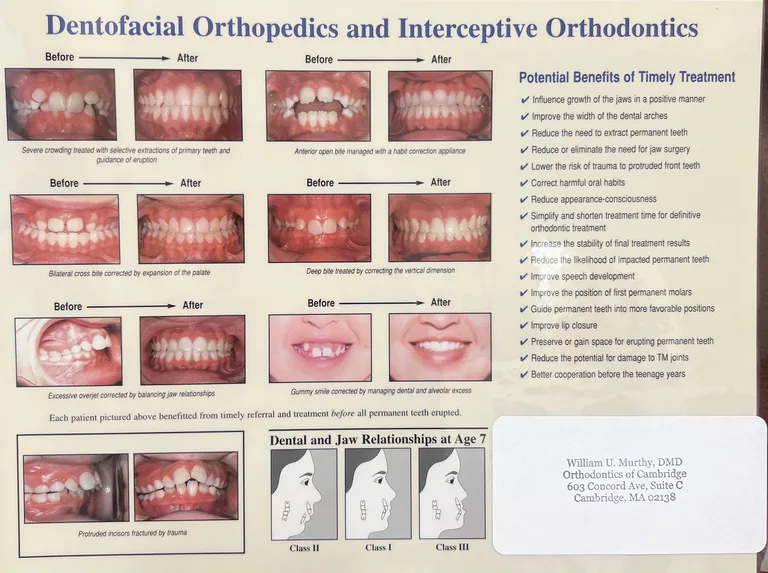
Early treatment, also called Phase 1 or interceptive orthodontics, addresses developing bite and jaw problems before they become more serious. At age 7, a child's mouth has enough permanent teeth for Dr. Murthy to evaluate jaw development and identify concerns early.
Early treatment typically takes 12–18 months and is often followed by a resting period, then Phase 2 comprehensive treatment. The goal is to guide jaw growth, make room for permanent teeth, and reduce the need for extractions or jaw surgery later.
Phase 2: Comprehensive Orthodontic Treatment
Comprehensive treatment typically begins around age 11–13, once most or all permanent teeth have erupted. This phase corrects the alignment of all teeth and finalizes the bite.

Braces
Metal or clear ceramic braces are highly effective for children and teens. Colored elastics make braces fun for younger patients.

Clear Aligners
Invisalign and Invisalign First offer a comfortable, removable option for children who are good candidates.

Phase 1 Appliances
Palate expanders, space maintainers, and functional appliances guide jaw development during growth years.
Has your child grown into the teen years? Phase 2 treatment is built around how teens actually live.
Explore Teen OrthodonticsFrequently Asked Questions
Why age 7?
By age 7, your child has a mix of baby and adult teeth that allows Dr. Murthy to identify emerging problems with jaw growth and tooth spacing. Early detection does not always mean early treatment — sometimes monitoring is the right plan.
Does my child definitely need Phase 1?
Not every child needs early treatment. Dr. Murthy will evaluate whether intervention is truly necessary, or whether watchful waiting until Phase 2 is more appropriate. There is no pressure.
Will Phase 1 eliminate the need for braces later?
Phase 1 can reduce the complexity of Phase 2 treatment, but most children who undergo early treatment will still benefit from a second phase of care once all permanent teeth are in.
Is the consultation free?
Yes. Initial consultations with Dr. Murthy are complimentary for both children and adults.
Start with a Free Consultation
Dr. Murthy welcomes children of all ages. Early evaluation is the best gift you can give your child's smile.
Wondering when to schedule a first visit? Learn the signs your child may benefit from an orthodontic evaluation.